

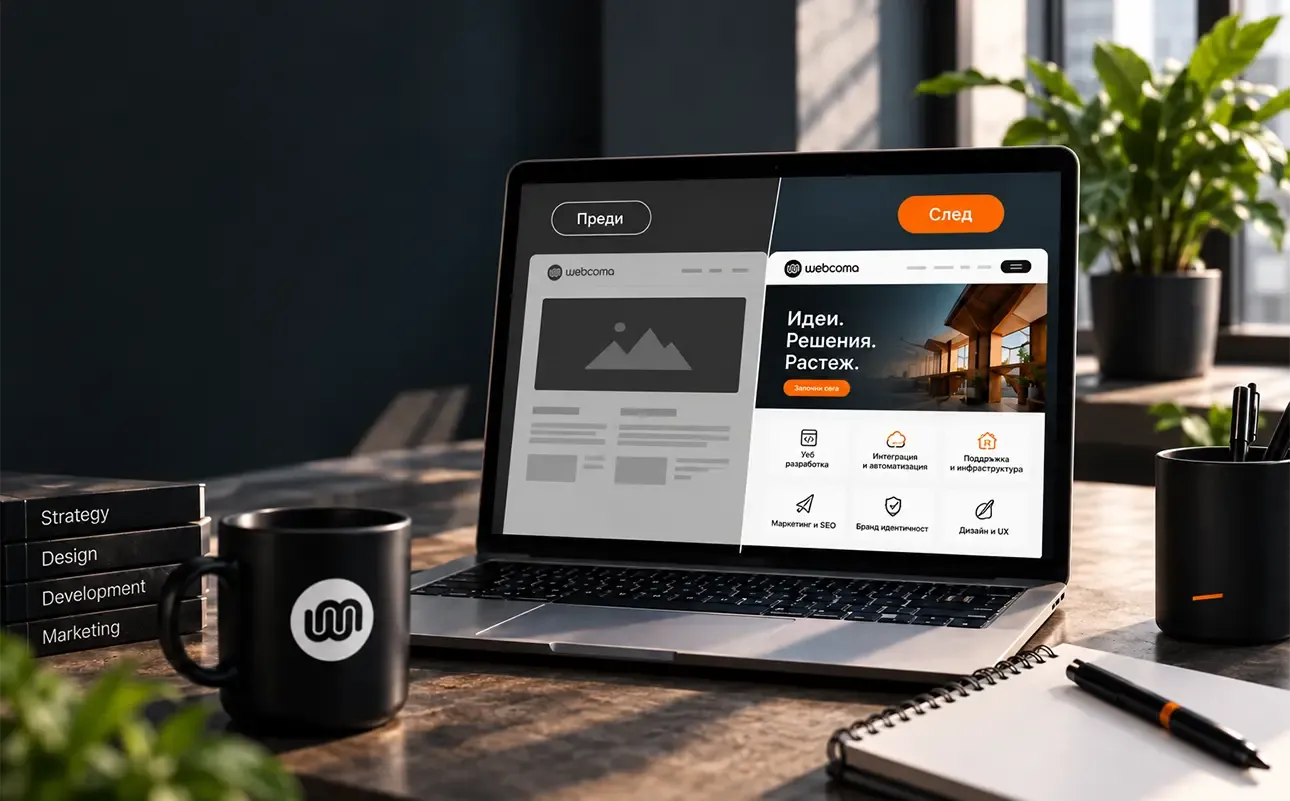

We are updating the WebComa website to explain our work more clearly: what we can help with, how we approach a task and what that looks like in a real project. Visual design matters, but it cannot answer those questions on its own.
This direction reflects how we present WebComa: a technical partner for businesses with specific tasks, constraints and a need to keep developing their projects after launch.
Services should make sense before the first conversation
We work on web development, integrations and automation, maintenance and infrastructure, marketing and SEO, brand identity, design and UX. A general list of those terms is not enough.
Someone browsing the site should be able to work out which service relates to their task, what it covers and what the work will deliver. Specific descriptions, scope and service questions are therefore an important part of how we present what we do.
Clients do not need to know the exact name of a service beforehand. A task might begin with “our catalogue is difficult to maintain” or “enquiries get lost between different systems”.
Real projects put promises in context
“We build websites” says little about the work involved. The WooCommerce platform for Palisandar provides more context: product variants, specialised data and logic for enquiries and catalogue management.
It is not a model every business needs to follow. The project helps explain what it means to adapt a web solution to an actual sales process.
Similarly, the visual editing of the product catalogue explains design work through the materials and how they are used. Examples like these are more useful than a general claim about quality.
Show who is responsible for the work
Our team has different roles: systems architecture, development and infrastructure for Nikolay Kovachev; graphic design, brand identity and WordPress work for Yavor Marinov.
We want the website to explain those roles clearly. Tasks call for different people, and clients have good reason to understand the expertise behind a proposal.
Work after launch belongs in the picture too
Maintenance and development are part of how we describe our approach. A website may need new material, technical changes or connections to other systems after launch.
Our website should therefore explain both individual tasks and the option of working together over time. That does not mean every client needs to commission work across all areas or commit to a full service arrangement.
How to judge the update
The useful question is whether visitors can understand our work, find a relevant example and describe their own task with less guesswork. The new design should support that.
That is the role we want the WebComa website to serve: a useful starting point for a specific conversation about a project, as well as a place to present our services.